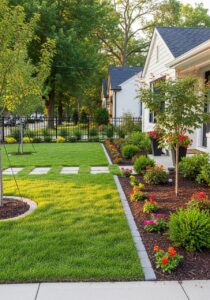
Your exterior space is like a warm welcome to everyone who comes by. It shows off your unique style before they even ring the doorbell.
You can turn a small area into a beautiful spot. By using smart small front yard landscaping, you can make the most of your space.

Best 3 Small Front Yard Lawn Ideas for Home That Boost Curb Appeal
These curb appeal ideas not only boost your home’s value but also make it feel more welcoming. Let’s dive into how to make your outdoor area more inviting today.
Key Takeaways
- Your exterior space creates the first impression for guests.
- Thoughtful design reflects your personal style effectively.
- Strategic planting increases the overall value of your property.
- Even limited spaces offer great potential for beauty.
- Simple changes create a more inviting environment.
Setting the Stage for Your Home’s Curb Appeal
Your front yard is the first thing people see when they visit. It shows off your style and is a key part of your front yard design. By carefully planning your outdoor space, you make sure it meets your needs.
Before starting any home exterior improvement project, think about how you’ll use your yard. Do you want it to increase your home’s value or be a relaxing spot for weekends? Knowing your goals helps you choose the right plants, materials, and layout.

front yard design
Walk around your yard to see what works and what doesn’t. A good front yard design means looking at your space critically. Look for areas that need more color, have drainage issues, or feel disconnected from your house.
Planning well at this stage avoids expensive mistakes later. When you match your home exterior improvement with your lifestyle, you get a look that feels planned. Thoughtful preparation leads to a beautiful, useful landscape that lasts.
The Best 3 Small Front Yard Lawn Ideas for Home That Boost Curb Appeal
Creating garden curb appeal in a small space needs a good plan and creativity. Every inch matters in a small yard. With careful design, you can make a small area stand out.
The “rule of three” is key for layering plants. Place tall plants at the back, mid-height in the middle, and short ones up front. This makes your DIY landscaping look neat and not crowded.

garden curb appeal
It’s important to pick one theme for your garden beds. Too many plants can make your yard look messy. Choose a style that fits your home and the weather.
Here are three ideas to make the most of your small yard:
- The Minimalist Xeriscape: Great for those who don’t want to spend a lot of time on gardening. It uses plants that don’t need much water and decorative gravel for a modern look.
- The Lush Pollinator Meadow: This idea uses native wildflowers and grasses. It creates a home for local animals and adds color to your yard.
- The Structured Tiered Garden: Use vertical space and walls to add levels to your yard. It makes even the smallest yard look interesting.
These ideas offer big results that are easy to do yourself. They work for both new gardeners and those with experience. They will help you improve your garden curb appeal with ease.
Idea One: The Minimalist Xeriscape Lawn
Xeriscaping is a smart choice for homes that want to save water. It’s perfect for places where water is scarce. This method makes your home look great while saving water.

xeriscape design
Benefits of Low-Water Landscaping
This method cuts down on the need for watering. By picking plants that love your local weather, you get a low maintenance lawn. It stays green without needing constant care.
It also means less time spent on yard work. No more mowing or fertilizing every weekend. You can relax in your yard instead.
Selecting Drought-Tolerant Plants and Gravel
For a low maintenance lawn, choose native succulents, ornamental grasses, and hardy shrubs. These plants love local rain and need little extra water once they’re settled.
Adding different gravel textures makes your yard look neat and professional. Crushed granite or river rock is a durable ground cover. It keeps weeds away and adds color to your garden beds.
Design Principles for a Clean Aesthetic
Good xeriscape design is all about keeping it simple. Grouping plants by their water needs helps your yard get the right amount of moisture. This way, you save water and avoid waste.
Use empty space wisely with stone paths or big boulders. This minimalist approach stops plants from getting too crowded. It lets each plant shine, making your front yard look modern and elegant.
Idea Two: The Lush Pollinator-Friendly Meadow
Turning your front yard into a meadow is a great way to welcome nature. By swapping a regular lawn for a pollinator garden, you create a lively space that changes with the seasons. This not only saves water but also becomes a safe haven for local wildlife.

pollinator garden
Creating a Habitat for Local Wildlife
A well-thought-out meadow becomes a thriving ecosystem right outside your home. It attracts bees, butterflies, and hummingbirds by offering nectar and pollen. These creatures are crucial for your local environment and make your home’s exterior lively.
To really make a difference, choose flowers that bloom at different times. This way, you provide a consistent food supply for insects all year. A mix of blooms is key to a successful pollinator garden.
Choosing Native Wildflowers and Grasses
Native plants fit your local climate better and need less care than non-native ones. They’re naturally resistant to pests and diseases, saving you time on upkeep. This lets you enjoy your yard more.
When picking plants, consider your soil type and sun exposure. Mix native grasses with colorful wildflowers for structure and shelter. Here’s a table with some great options for your garden:
| Plant Name | Bloom Color | Pollinator Type |
| Purple Coneflower | Purple | Bees & Butterflies |
| Black-eyed Susan | Yellow | Bees & Beetles |
| Milkweed | Pink/Orange | Monarch Butterflies |
| Little Bluestem | Blue-Green | Nesting Habitat |
Managing Growth for a Tidy Appearance
Many fear a meadow will look untidy, but it’s easy to keep it neat. Use stone or metal edging to define your meadow from walkways or driveways. This makes your garden look intentional, not wild.
Trimming dead stalks in late winter or early spring keeps your meadow looking good. Adding sculptural elements like a birdbath or bench also helps. These touches keep your pollinator garden beautiful and functional.
Idea Three: The Structured Tiered Garden Lawn
Adding a tiered garden to your landscape brings depth and interest to small spaces. It’s great for sloped yards or those who want a more architectural look. By dividing your lawn into levels, you turn a simple area into a sophisticated outdoor feature.
Utilizing Vertical Space in Small Yards
Think vertically to make the most of your space. Use trellises, fences, or walls for climbing vines and plants. This makes your front yard look bigger than it is.
Materials for Retaining Walls and Borders
Choosing the right materials is key for a stable structure. Natural stone, pressure-treated wood, and concrete blocks are good options. They offer durability and style, letting you match your tiered garden to your home.
| Material | Durability | Installation Difficulty | Style |
| Natural Stone | High | High | Rustic/Classic |
| Pressure-Treated Wood | Medium | Medium | Modern/Clean |
| Concrete Blocks | Very High | Low | Industrial/Sturdy |
Planting Strategies for Multi-Level Interest
Layer your plants by height and growth. Place tall shrubs or grasses at the back for a lush look. Use trailing flowers or ground covers to soften the edges.
This strategic layering makes every inch count. Mixing textures and colors across levels creates a dynamic space. Your front yard will stand out, adding value to your property.
Essential Tools for Maintaining Your Small Lawn
Keeping your yard in top shape is much easier with the right lawn care tools. The correct equipment makes tasks efficient and manageable. High-quality gear saves time and ensures your plants thrive.
Handheld Pruners and Shears
For small yards, precision is everything. A sharp pair of bypass pruners makes clean cuts on shrubs and perennials. Ergonomic shears also reduce hand fatigue during long sessions of shaping your garden borders.
Compact Mowers and Trimmers
Small spaces need agility, making compact mowers ideal. These machines are easy to store and maneuver around delicate areas. Pairing a reliable mower with a lightweight string trimmer saves time and achieves a professional finish.
“The glory of gardening: hands in the dirt, head in the sun, heart with nature. To nurture a garden is to feed not just the body, but the soul.”
Alfred Austin
Ergonomic Watering Solutions
Proper hydration is key for a healthy lawn. Scotts® Green Max™ Lawn Food, with 5 percent iron, enhances greening in just three days. Ergonomic watering wands prevent back strain and ensure water reaches the roots.
| Tool Category | Primary Benefit | Best For |
| Bypass Pruners | Clean, healthy cuts | Shrubs and flowers |
| Compact Mower | Easy maneuverability | Small grass patches |
| Ergonomic Wand | Reduced strain | Targeted hydration |
Maintaining your landscape becomes rewarding with these essential lawn care tools. Consistent care and the right equipment keep your front yard vibrant all year.
Choosing the Right Grass or Ground Cover for Your Climate
Finding the right grass varieties for your area is key to a healthy yard. The right choice means less watering and fewer chemicals. This keeps your yard looking great all year.
Cool-Season Grass Varieties
In the northern US, you need grasses that do well in cooler weather. These grow best in spring and fall. Kentucky Bluegrass and Tall Fescue stay green even when it’s cold.
Warm-Season Grass Alternatives
In the south, warm-season grass varieties are best. They thrive in the heat and grow well in summer. Bermuda grass and Zoysia are great for areas that get a lot of foot traffic.
Low-Maintenance Ground Cover Substitutes
For small yards, grass might not be the best choice. Consider Dutch Clover or Creeping Thyme as ground covers. They need little mowing and add beauty with flowers that attract pollinators.
| Type | Best Climate | Maintenance Level |
| Cool-Season | Northern US | Moderate |
| Warm-Season | Southern US | Low to Moderate |
| Ground Cover | Various | Very Low |
Incorporating Hardscaping to Complement Your Greenery
Using hardscaping tips can link your home’s design with your garden. Adding structures makes your plants pop. These elements help your yard look complete and planned.
Pathways and Walkway Materials
Choosing the right material for walkways is key for both looks and use. Natural stone pavers give a classic vibe, while crushed gravel is cheaper and lets water through. Make sure your paths are wide enough for easy walking.
Decorative Stone and Mulch Accents
Decorative stone and mulch frame your plants beautifully. They keep weeds away and keep soil moist, which plants love. Using different colors, like dark mulch with light stones, adds a professional touch to your garden.
Lighting Fixtures to Highlight Your Design
Landscape lighting makes your property shine at night. Use moonlighting in trees for a soft glow. The right lighting not only makes your garden safer but also shows off its unique textures.
| Material Type | Best Use Case | Maintenance Level |
| Natural Stone | Main Walkways | Low |
| Crushed Gravel | Garden Paths | Medium |
| Wood Mulch | Planting Beds | High |
| LED Spotlights | Feature Lighting | Low |
Seasonal Maintenance Tips for Year-Round Beauty
Learning seasonal yard maintenance is key to a lively home exterior all year. Break tasks into smaller parts to keep your small lawn looking great, no matter the weather. Staying consistent prevents damage and keeps plants healthy.
Spring Preparation and Soil Health
When the frost melts, focus on reviving the soil. Clear away winter debris and dead leaves to let sunlight in. Testing your soil pH helps decide if you need to add compost or fertilizers.
Aeration in spring lets roots breathe and soak up water better. Early bed preparation leads to a healthy growing season. This saves time and effort later.
Summer Watering and Weed Control
In hot weather, your lawn and garden need careful watering. Use deep, less frequent watering to encourage deep root growth. Watch for weeds, as they steal nutrients from your plants.
Don’t overlook your outdoor spaces in summer. Use Scotts® Outdoor Cleaner Patio & Deck with ZeroScrub™ technology to clean walkways without harsh scrubbing. Clean paths boost your home’s curb appeal.
Fall Cleanup and Winter Protection
In autumn, get your landscape ready for winter. Rake leaves and trim back perennials to prevent disease and pests. Mulch provides essential insulation for roots against winter’s freeze-thaw cycles.
If you get a lot of snow, wrap delicate shrubs to avoid branch damage. These steps protect your garden until spring. Regular yard care is an investment in your home’s beauty.
Common Mistakes to Avoid in Small Yard Landscaping
Many homeowners unknowingly harm their curb appeal with simple mistakes. Even the best plans can go wrong if you make common landscaping mistakes. Knowing these pitfalls helps keep your yard beautiful and healthy all year.
Overcrowding Your Planting Beds
It’s tempting to fill every inch of your garden. But, overcrowding makes your garden look cluttered. Plants packed too tightly fight for nutrients, sunlight, and water. This suffocates your garden and makes it hard to keep it looking neat.
Ignoring Drainage and Soil Quality
Many focus on the looks of plants, not the soil. Poor drainage causes root rot and stunted growth. Always check your soil quality and make sure your yard slopes to keep water away from your home.
Neglecting Scale and Proportion
Choosing plants that grow too big for your yard is a common mistake. Think about the mature size of each plant compared to your home. Proper proportion balances your yard, while big plants can make it feel cramped.
| Common Mistake | Negative Impact | Recommended Solution |
| Overcrowding | Messy, unhealthy plants | Follow spacing guidelines |
| Poor Drainage | Root rot and water damage | Install French drains or soil amendments |
| Bad Proportion | Disrupted visual balance | Research mature plant sizes |
| Ignoring Soil | Weak, struggling growth | Test pH and add organic compost |
Conclusion
Turning your small front yard into something beautiful is rewarding. It can even increase your home’s value. You now know how to pick the best plants, tools, and materials for your area.
These ideas are just the start of your creative journey. You can go for a simple xeriscape or a colorful pollinator garden. Your choices show off your style and care for your property.
Keeping up with small tasks is key to a great landscape. Doing a little bit often helps avoid big jobs. It keeps your yard looking good all year round.
Start with a small project this weekend to see quick changes. Companies like Fiskars or Scotts have tools to help you. Soon, your front yard will be a place you love coming home to.
FAQ
How do you determine if your yard requires cool-season or warm-season grass?
What specific plants work best for a low-maintenance xeriscape design?
How can you implement the “rule of three” in a small garden bed?
Which essential tools should you invest in for a compact front lawn?
How do you prevent a pollinator meadow from looking unkempt to your neighbors?
What are the benefits of using tiered retaining walls in a sloped front yard?
Are there eco-friendly alternatives to traditional turf grass?
How does strategic outdoor lighting enhance your landscaping design?

Hi, I’m Emma .
i founded HomeDecorCozy more than 14 years ago, and I began sharing the ideas with people who wanted to make beautiful homes without spending too much money.