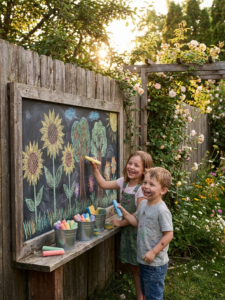
Geting your lawn transformed into an art studio is a wonderful idea to get your child to be creative. It provides them with a new canvas to play on. This promotes self-reliance and creativity.We have gathered 5 Kids Outdoor Art Ideas to Creative Backyard Play to transform your backyard into a discovery place. These simple tasks allow young brains to develop as they play in the sun.
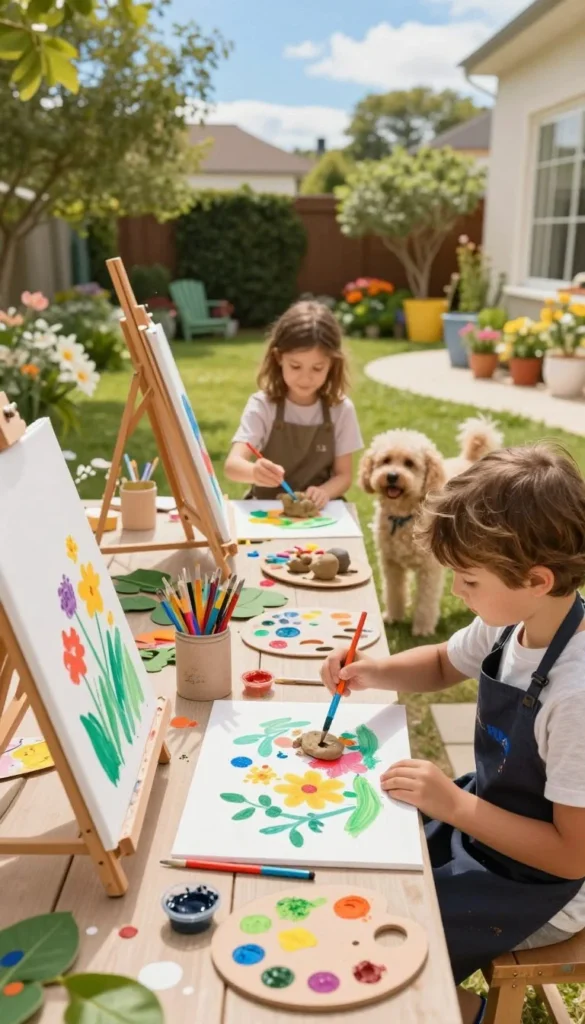
Creative play at the backyard enhances self-confidence in kids. Every afternoon is special with these fun activities. Allow your kids to explore their artistic potential at home.
Key Takeaways
Making your lawn your art studio is independent.
Children are free to use their imagination in simple projects.
Outdoor settings give an exclusive canvas in which art can develop.
Practical activities create confidence among the young learners.
All families can easily explore art with the help of the materials provided.
Outdoor Artistic Expression with Children: Its Values.
Outside areas are rich in sights, sounds, and smells that cannot be found in the inside. Beginning work with the out-of-doors children, you provide them with a world of discovery. Outdoors: The outdoors is a large canvas, and children can experience textures, colors, and light, which they cannot do at home.
These children crafts will enable children to become more skilled in combining their hands and eyes. Their fine motor skills are enhanced as they paint, draw or make use of natural materials. This plays a crucial role in performing tasks, which require a great deal of hand-eye coordination in the future.
Creativity: Intelligence is fun.
Albert Einstein
The most successful kids art projects are not necessarily the product, but the process. By emphasizing fun in creating, you eliminate the pressure to make something perfect. This will turn the time of creativity into happiness to your family.
When you allow children to explore, you enable them to relate to the world. These outdoor kids art activities develop their levels of wonder and confidence. This chaotic, multi-coloured process leaves memories and makes your child grow in every aspect.
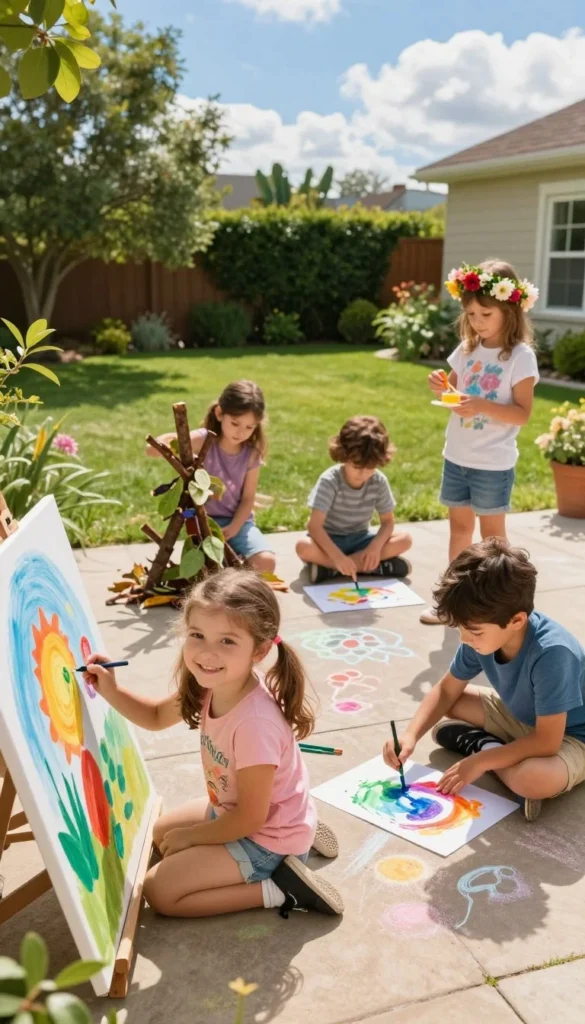
Important Materials in your Art Studio in the Backyard.
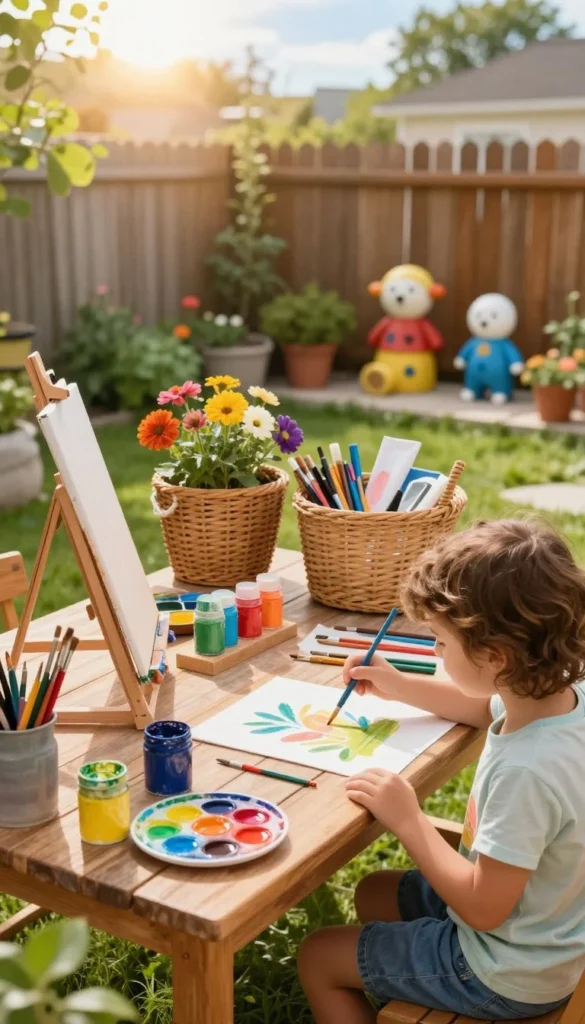
All you need to do to build your backyard art studio is a few simple things and imagination. You do not have to spend much and purchase fancy equipment to enjoy summer art activities with your children. With your supplies prepared, it makes the creative process enjoyable to all.
Select child-friendly, outdoor, and clean art supplies. Go with washable paints, unwilted brushes, and objects around the house. They are wonderful on outdoor projects. Store them in a bin so that they are fast to set up and clean.
To do your summer art, you will need a wet washcloth. It aids in drips, hand washing, and wiping spills. With a clean space, your kids will be concentrated on the art.
A portable caddy will help you to maintain order in your art studio in the backyard. It allows you to have your art station easily move around. The following is a list of what you should have in your art supplies to kids.Supply Category
Recommended Item
Primary Use
Painting Tools
Washable Tempera
Large-scale canvas work
Application
Assorted Brushes
Fine detail / texture work.
Cleanup
Wet Washcloths
Spill and hand control.
Recycled Goods
Cardboard Scraps
Eco-friendly canvases.
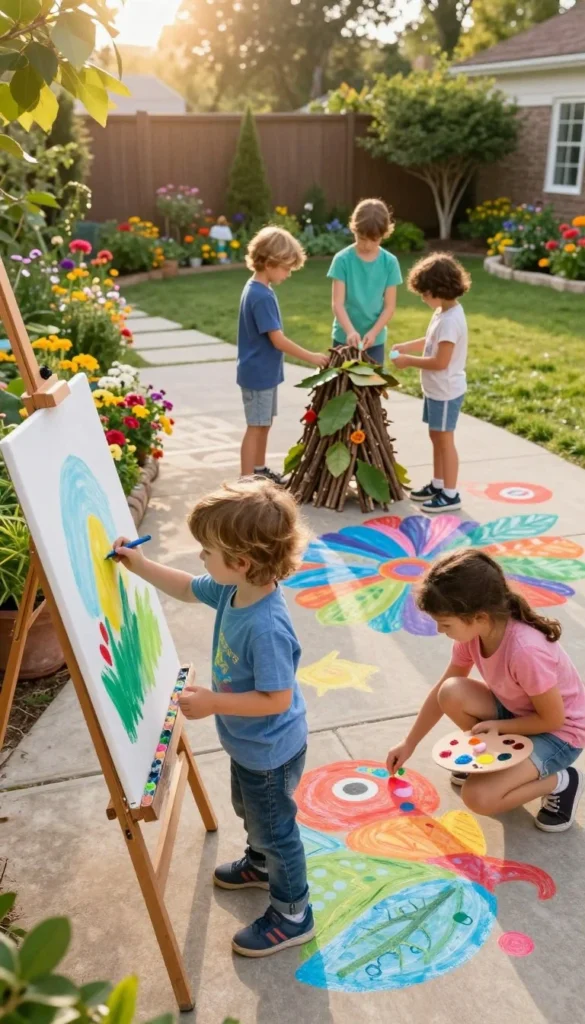
Outdoor 5 Ideas of Art in the Backyard to play with kids.
Find out how to ignite the imagination of your child with these five exciting outdoor art works. There is no need of an expensive studio or equipment. A love of artistic expression outdoors can be nurtured with overly simple materials available in and around your home.
These projects will ensure children are kept busy over long durations. They emphasize the pleasure of the process, and not the end product. This plays a vital role in imaginative backyard play. The following are five ideas that are available to make your lawn or patio a masterpiece zone:
Nature-Inspired Painting: Painting on rocks, leaves and sticks, relate art to nature.
Giant Sidewalk Murals: Use huge chalk drawings to transform your driveway into a gallery of images.
Water-Based Painting: Supply buckets and brushes of water to paint on concrete surfaces, which evaporate to leave no mess.
Vertical Easel Stations: Construct simple frames or fences to promote standing, large-scale drawing and painting.
Sun Printing Experiments: Learning how light works, create your own unique silhouettes on light-sensitive paper.
The activities promote imaginative outdoor games and reduce the level of clean up stress. These 5 Kids Outdoor Art Ideas to have Creative Backyard Play will provide the optimal balance. It is best to start small, and see what your child is interested in and see their confidence improve with each session.
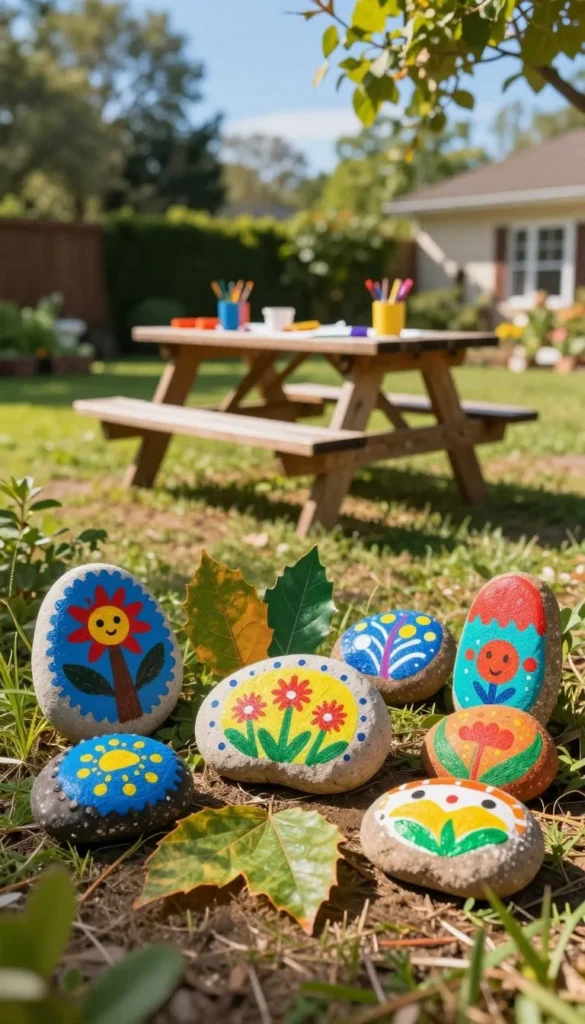
Leaf and Rock Painting inspired by nature.
Begin making your backyard a work of art using ground treasures. The nature-based art allows children to get in touch with nature and create beautiful art that is short lived. It educates them to appreciate the textures and forms of the wild.
Advertising Natural Canvases, Growed in Your Garden.
Get children to discover by searching in your garden. Find level pebbles or hard leaves. They are excellent in artistic expression.
Gathering of these items brings nature crafts to children. Children are taught to observe the details of nature. Ensure that the materials are clean and dry prior to painting.
Painting on porous surfaces Techniques.
Outdoor painting on stones and leaves require special painting methods. These surfaces absorb moisture quickly. Apply a white acrylic or gesso base coat in order to make colors bright.
In the case of young artists, apply good quality tempera paints which are thick in order to cover. It should be patient because these canvases take longer time to dry compared to paper. You can then hang them in the garden as a demonstration of the art of your child.
Developing Massive Artworks on Drives.
Give an outdoor art a new dimension with liquid chalk. Grate or mash your chalk sticks into powder. Add a small amount of water to this powder to create a bright paint-like material.
This liquid chalk allows children to create thick and vivid colors. It is an excellent solution to travel large distances in a short time. Only a hose is necessary to clean up. Children will paint using brushes or sponges on the floor.
The Stencils to Improve Sidewalk Art.
Stencils may transform your art into a more refined one. They assist children in making geometric chalk patterns that are professional. These designs are ideal in the minds of younger artists who may be intimidated by an empty drive way.
Your own stencils can be made of cardboard or cardstock. In this manner, they are more durable. Children can combine shapes and colors to create complicated shapes. This will educate them on symmetry and space awareness as they play.
Method
Best For
Cleanup Level
Dry Chalk Sticks
Quick sketches
Low
Chalk Powder Paint
Large murals
Medium
Geometric Stencils
Geometric chalk designs
Low
Brushes and buckets used to paint with water.
You can turn a bucket of water into a means of art and science. Water painting is also a wonderful activity to engage in during fun summer art projects, which do not create a mess. It is a nice method of letting kids be inventive outdoors.
The Wizardry of Drying Art on Concrete.
This is a unique activity, as it is temporary. Children draw on the driveway or the patio and the water leaves dark lines. Seeing the art go away teaches them of science and observation.
The canvas is reset, which means that kids can make numerous attempts. They are able to create large designs without having to worry about creating a mess. It is a fantastic way of gaining confidence.
Mixing Colors with Water Tubs.
It is also more fun when the water stations are coloured. Put water in tubs and place food coloring or liquid watercolors. This allows children to be taught about color theory outdoors.
Get them to mix colours by dipping brushes in various tubs. They will observe how to create new colours such as green and purple. It is an amusing method of learning colors.
Self-assembled Easels and Vertical Art Stations.
Constructing homemade outdoor easels will allow children to experiment with creativity. Standing to paint assists them to acquire motor skills and spatial awareness. It transforms a backyard into a studio with no boundaries to imagination.
Constructing a Basic Frame to hang paper.
A simple frame can be made out of simple lumber or PVC pipes. Attach clips or binder rings in the top to change paper easily. These frames are light and thus easy to store when not in use.
Art is nothing which you see, but what you can make others see.
Edgar Degas
Leveraging Fences to Vertical Creativity.
When space is limited, your fence will be ideal in vertical art stations. All you need to do is to stick butcher paper or a waterproof whiteboard to the slats. This keeps the ground free and has a stable surface to big brush strokes.
The type of surface to use will depend on your requirements and the age of your children. The following table will assist in making your choice:
Surface Type
Best For
Durability
Butcher Paper
Quick sketches
Low
Whiteboard
Repeated use
High
Plexiglass
Finger painting
High
Vertical solutions help to keep the kids excited and interested in art. Their sense of ownership and pride is enhanced by having a special area.
Experiments with Cyanotype and Sun Printing.
With the sun, you can create beautiful effects with high contrast silhouettes. This is a science and art method, called cyanotype art. It is ideal in families that appreciate nature based art and wish to adventure in nature.
Learning about the Science of UV light Art.
The principle behind this activity is a simple chemical reaction that is triggered by UV light. In case of treated paper, when it is exposed to sunlight, the UV rays alter the color of the paper. The sections occupied by objects remain light and they seem white on a dark blue backdrop.
This nature craft is an excellent kid nature craft as it produces results immediately. Children are able to observe the color change, which can help them to comprehend light sensitivity. It makes your backyard the home of discovery and creativity.
Choosing Objects to Unique Silhouettes.
To achieve the most, select objects whose shapes are distinct and unique. The great nature-inspired art made by ferns, maple leaves and flower petals is due to their detailed edges. Flat objects are more effective compared to thick objects since they produce sharp lines.
Ask children to discover interesting textures out in nature. Another method is to experiment with artificial objects such as keys, lace, or forms with natural ones. Every single cyanotype work will present the individuality of your garden by being a well-thought decision.
Creating a safe and accessible zone in art.
With a few steps, you can transform any part of your garden into a backyard art studio. Scheduling your space can help children to be creative and keep your house secure. Such a system transforms your outdoor space into a fun and relaxation zone.
To Find the Right Place in Your Backyard.
Locating the ideal place is essential to safe art areas in your family. Find a flat and even space such as a patio or gravel to prevent stumbling. None on sensitive flower beds or ornamental lawn furniture which is difficult to wash.
Consider the sunshine in your selected place. The place should have some shadowing, keeping the artists cool and avoiding glare. Ensure that it is close to water, such as a garden hose, so that it can be easily cleaned.
Dealing with Messes and Cleaning up with ease strategies.
Present resources that do not necessarily need to be utilized in a particular manner. This allows your child to decide, without having to be concerned about the consequence. The freedom granted to them develops their self-esteem as a result creativity.
Praise of the Process and Not the Final Product.
It is the experience rather than the finished art that is the magic of outdoor art. You teach your child that his or her effort is important by concentrating on the fun of creating. This would assist them to be more resilient and willing to do something new.
Next time you are outside, to reinforce this positive perspective, consider the following simple ideas:
Open-ended questions should be asked about their decisions, such as “What made you pick that color?
Put their work on the wall where everybody can see it, to demonstrate that you appreciate their creativity.
And concentrate on the process of painting or building and have fun with what they are doing at that moment.
Look for new tools to be used, even when it gets dirty or strange.
Your contributions are essential in creating sustainable art confidence among kids. You make their backyard a safe place to explore, grow, and express themselves by celebrating all that their art represents.
The inclusion of Art in Everyday Outdoor Play.
Making outdoor play routines turn art into a daily routine of children. It makes creativity a routine and not an occasion. In this manner, children are able to fantasize freely, enjoying nature, and the sun.
Creative Time: Summer Scheduling.
Good habits are best begun in summer. Block out time weekly to be creative. The most important thing is to make your backyard a creative place and all that is through consistency.
Do artistic work in the morning when the weather is cooler. In this manner, family members will have time to enjoy the outdoors before it becomes too hot. A little, thirty minutes session can be very joyful.
A Physical Activity plus Artistic Expression.
Combining motion with art maintains interest in kids. Kids Process art allows them to practice the entire body during their creations. It is an enjoyable method of energy release and development of fine motor skills.
As an example, you can organize a race in which artistic tasks will be done at each station. It makes everybody active and creative. Here is just a basic schedule to combine these activities into your week.
Day of Week
Physical Focus
Artistic Focus
Duration
Monday
Running/Jumping
Sidewalk Chalk
45 Minutes
Wednesday
Climbing/Balancing
Nature Painting
60 Minutes
Friday
Dancing/Movement
Water-Based Art
45 Minutes
Saturday
Active Exploration
Sun Printing
90 Minutes
This scheme keeps children on the move and motivated. It is not to create perfect art but to enjoy the delight of discovery, so that kids will enjoy creating all their lives.
Conclusion
There are things that kids can do in your backyard. Through process art you get them to enjoy the process of creating. This gives them confidence in creating art.
Nature is ideal to play and invent with kids. Examples of companies with tools that align with such experiences include Crayola and Melissa and Doug. It has nothing to do with creating art, it has everything to do with the beauty of the world.
Start by making a weekly session of creative play. See how your children touch, feel, and see. This time out bonds your relationship and leaves great memories.
Sharing experiences with others will inspire them. You will influence your child a lot in cultivating imagination. Love all the chaos and the fun of any outdoor experience.
FAQ
Why is outdoor art with your children so important?
Outdoor art provides children with a special sense. It assists them in fine motor coordination as well as being in touch with nature. It makes being creative not a burden.
What are the supplies required to create a working art studio in the backyard?
You do not have to have costly ones. Simple materials such as Crayola paint, and recycled materials are effective. Playtime can be spontaneous because of keeping them organized.
What can you do with the natural canvases to create nature-inspired artworks?
Make use of garden materials such as stones or leaves as canvases. The outdoor painting method allows children to experiment with wild textures and forms. They produce ephemeral, nature-related art.
How can the classic sidewalk chalk murals be improved?
Apply chalk patterns with stencils. Or make chalk paint of colorful flowing art. These techniques make art on the driveway appear smooth.
So why is water-based painting an ideal no-mess activity?
Painting on water is excellent on hot days. It is amusing to see art fading on concrete. It also learns mixing of colors in the outdoor environment.
What is the benefit of vertical art stations such as DIY outdoor easels to children?
Easy to make easels or fences that are turned into art stations alter the way kids paint. It is time saving and promotes movement. It is ideal when working on big paperworks.
So, what is the science of sun printing and cyanotype experiments?
Sun printing is a combination of science and nature. It demonstrates the reaction of UV light with paper. Children make gorgeous figures using yard items and capture the outdoors.
What can you do to create a safe art area to reduce what is going on in your backyard?
Select a secure point, such as a paved one. Take care of measures such as a water station to make cleaning easy. This facilitates art activities.
What can you do to support the artistic confidence of your child with process art?
Get concentrated on the creative process, not only on the finished output. Allow children to experiment. The process is celebrated, creating a lifetime love of art.
What do you consider the advantages of including art in everyday outdoor play activities?
Incorporate creativity into everyday life. Plan artistic time during summer. This combination of art and action keeps children on the move and motivated.

Hi, I’m Emma .
i founded HomeDecorCozy more than 14 years ago, and I began sharing the ideas with people who wanted to make beautiful homes without spending too much money.